Showing posts with label reading. Show all posts

Wednesday, July 6, 2016

What's your type?

When you are teaching students how to comprehend a text, do you lean toward fiction or nonfiction?


My type tends to be nonfiction ...
      Is this because of the population I am teaching?
      Is this because of my interest?
      Is this because of student interest, especially during the early elementary ages?
      Is it really easier to use nonfiction?


"Much research has been done on why and how students can best comprehend a text, but less has been said about what kinds of text can best aid the development of comprehension skills"  according to Carol Einstein, in Activating Comprehension (EPS).

Nonfiction text allows for quick and easy instruction with "RIGHT THERE" kinds of questions. You know, those kinds of questions that have direct answers that are right there in the text. This is a common first step when teaching comprehension.

Nonfiction has many features - those great TEXT FEATURES that we emphasize. Have you heard yourself saying ...
    "these extra features contain information ..."
    "read the text features, too..."
    "Did you survey the WHOLE page?"
    "What extra information does the page give you?"
Questions that guide comprehension are often linked to text features. Students are instructed to use all of the juicy details from these features to better understand the story. This, again, is an early, and fairly explicit way to teach comprehension.

Nonfiction texts are usually high interest for young readers. Animals, insects, weather, natural disasters, space, cars, sports - you see what I'm getting at. Interest in the text makes comprehension much easier AND students will willingly reread, practicing close reading strategies. Rereading is, of course, a cornerstone to deeper understanding and comprehension instruction.

Nonfiction also allows for meaningful connections. Many times, students may come with prior knowledge or a partial understanding for nonfiction topics. Think about weather ... students usually have some knowledge of sun, rain, snow, etc, - this allows comprehension to be easier. Students can think back to what they know or have experienced. This is a wonderful asset to teaching comprehension.
AND, if prior knowledge is not there, nonfiction topics allow teachers to build that schema with field trips, videos, photographs, artifacts, games, activities, music and much more.

So ... is nonfiction text an easier choice for teaching beginning comprehension skills?
What's your thought?


Some great nonfiction resources I use:

      Close Reading                         Informational Text                                   
 Close Reading                                         


      ReadWorks  

Wednesday, January 29, 2014

Concept Confessions - Tacky & the Winter Games

Three snow days later . . . and I have been able to get a lot of things organized and cleaned up!

One of the things I spent time on, was an Olympic activity. Tacky is a infamous elementary character that many kids are familiar with and love to read about. This story, Tacky and the Winter Games, brings the Olympics into the discussion. I have been wanting to create some adapted reading materials to demonstrate comprehension for my students with multiple or significant disabilities. This is my attempt with a traditional trade book - as I have created some supplemental materials for content specific learning and I have created my own text or used resources like TarHeel Reader or Boardmaker Share.

Anyway, here is peek at Tacky and the resources that compliment the book . . .

So, at the beginning of the story, the penguins are training and preparing for the games
 
... and as you can see, Tacky is always up to something a little different!

Team Nice Icy Land marches at the opening ceremonies and the Olympic torch is lit. 
The games begin ...
Tacky gets in a little trouble . . . 
    and his team struggles to find a way to keep Tacky in line and show their skills.

By the end of the book, you can imagine that somehow, Team Nice Icy Land gets things to work and they are able to compete with the HELP of Tacky!


Check out the materials I made to go with this . . . you can get your hands on a copy over at TpT for $2.00!


Two versions of this "story element" board, depending on the skill level of the student. The answer cards are the same pictures as the second board - so students would be able to match the pictures.
I work on WHO, WHERE and WHAT questions a lot with my students. I tend to connect it with functional questions - for example, "Who is going to P.E. with you?" 


Again, two versions of this sequencing activity. One version of the picture cards are numbered, so some students will work on placing the cards in order. Other students might work on ordering the pictures by ordering the numbers 1-4. Finally, other students will work on ordering the pictures. Make sure you teach the skill of looking back at the story for this! My students have made such progress by flipping through the book and matching the scene - starting at the beginning and working through the story.


Here is a board to work on topic (main idea) and theme. I have three blanks on the board, but you could offer only two choices, depending of the ability of the student. Theme can be difficult - so this will be a challenge or extension activity for many of my students. 

I am excited to use this and will make changes as I go . . . but wanted to get it out while the Winter Olympics are current!

While I was working on this, I saw lots of advertisements for the iTunes App.
I have not purchased this nor have I looked closely at what it offers, but it did say it reads the story aloud and highlights some key words. 

Thursday, January 2, 2014

Clever Conclusions

I am preparing my plans for the return to school after Winter Break . . . 


I really need to hit some inferential comprehension skills in my small group reading, so I am starting with Drawing Conclusions. Now, my students have been exposed to this within their general education classroom, but I really need to break down these higher level thinking skills. So, I am starting with a GAME - high student interest, hands-on practice and ease into the school routine :)

Many of you have probably played this game or some version of it, but I wanted some directions, ideas and student forms all in one place - so here you go - CLEVER CONCLUSIONS!


Direction Page:
Student Form:

Tuesday, December 17, 2013

Books That Stand the Test of Time?


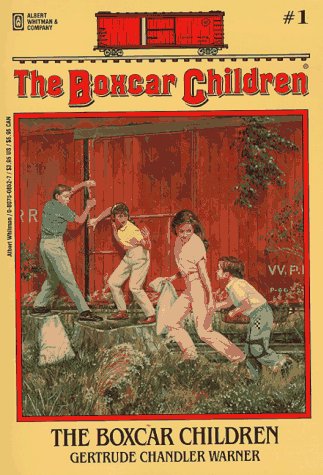
When I was in school, I remember reading The Boxcar Children as one of my first chapter books.


I remember the suspense of what would happen to these kids ... alone in the woods... living in a boxcar ...
I didn't get into the series, but I remember this book as one I truly enjoyed. 

So, now as a teacher, I was looking for some chapter books for my guided reading group - level M/N - and I saw this book in our book room! I just couldn't pass it up :) I started rereading it and creating a guided reading packet for my students. I was pulling out character trait stuff, cause & effect, sequencing, predicting, mood and inferencing. I am not finished with my packet, but I was pausing to ponder - Will this book be as enjoyable for my students? Is it timeless? Will they relate to it and be as engaged in the characters as I was?

Here is a sneak peek at the packet . . . 


What was one of your first chapter books? 
Have you used it with your students? Did it stand the test of time?